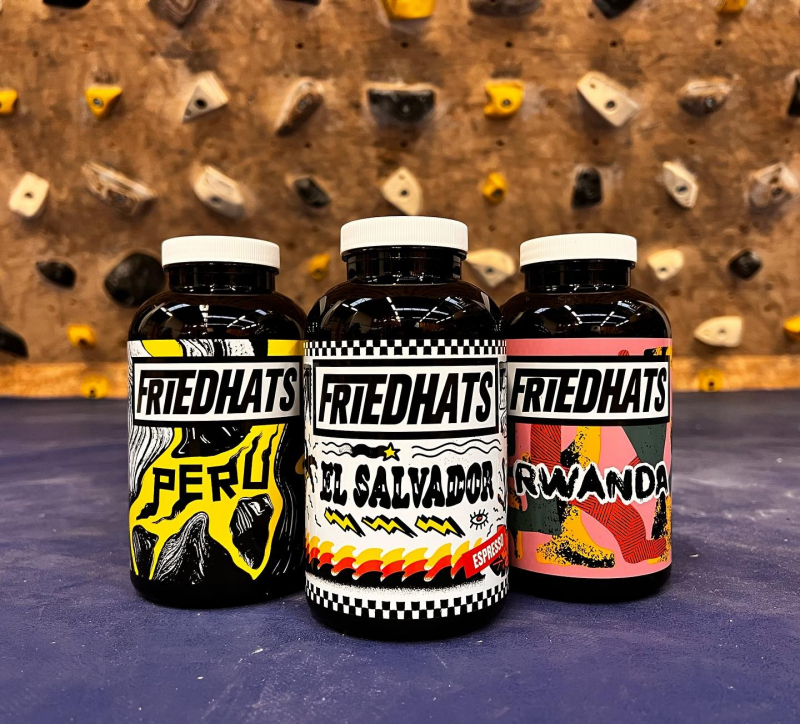
About Friedhats Coffee
Friedhats Coffee is a micro-roastery based in Amsterdam’s Bos en Lommer neighborhood. It’s run by two top professionals in their field—though, many years ago, there was no indication that this would be the case.
Lex Wennekler wanted to be either a lawyer or a professional mountaineer. But then, around 2010, he started making espresso at home on his manual lever espresso machine; in 2011, he founded De Espressobus—a Citroën HY food truck he drove to festivals—and eventually began roasting coffee himself. He opened the espresso bar and roastery Headfirst Coffee Roasters. For now, we’ll leave Lex to make coffee at Headfirst and tell the story of the second founder:Dylan Sedgwick. Dylan comes from a small island near Australia. His original dream was to make a name for himself in music and sound production, yet in 2007 he began working in Australia as a coffee machine technician. He moved to London, where he continued in that role until 2014, when he moved to Amsterdam and started working—you’ll never guess—at Headfirst Coffee Roasters! Lex and Dylan worked together for two years, but then Headfirst had to close, so they both set out to open their own micro-roastery, Friedhats.
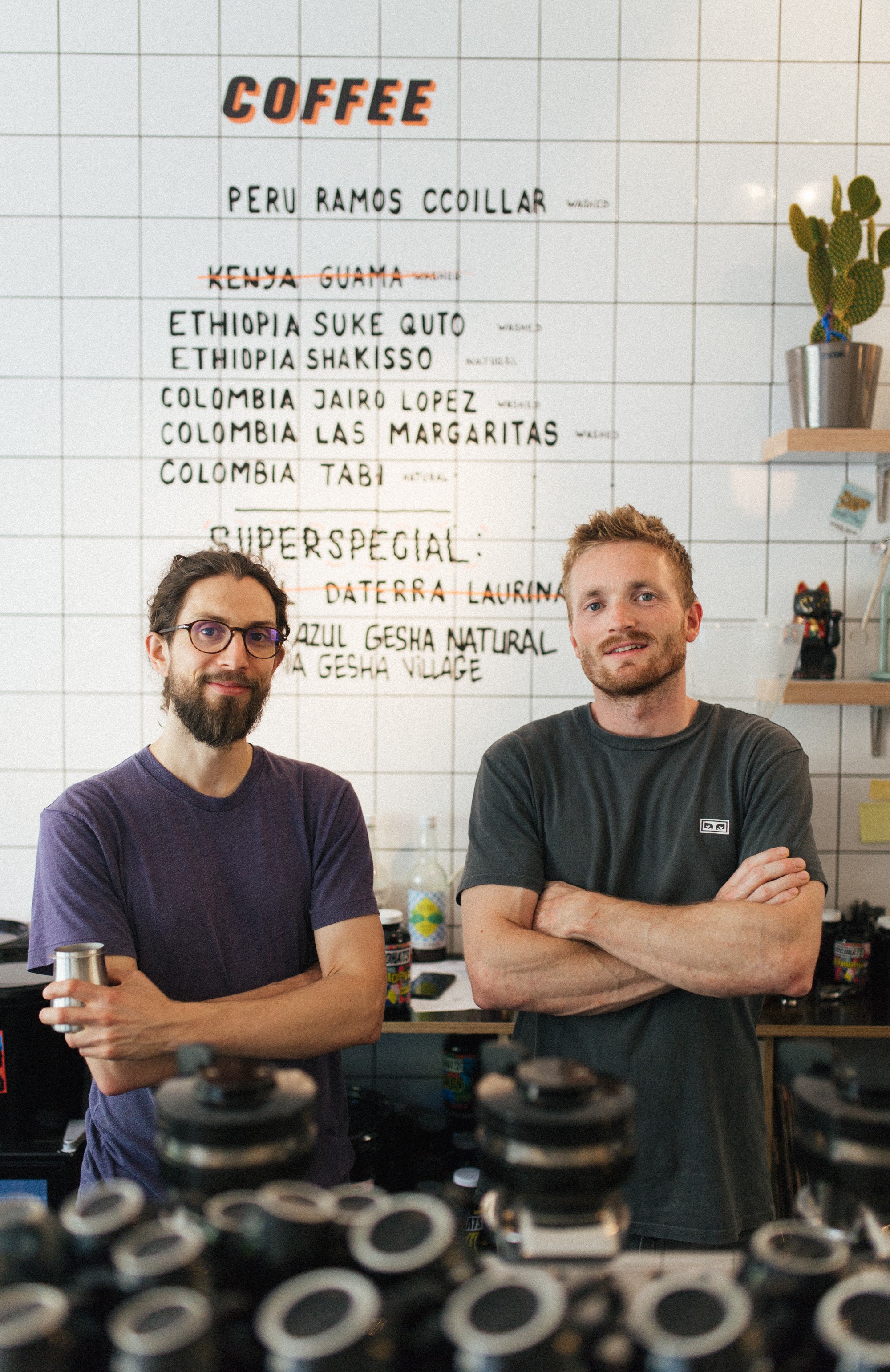
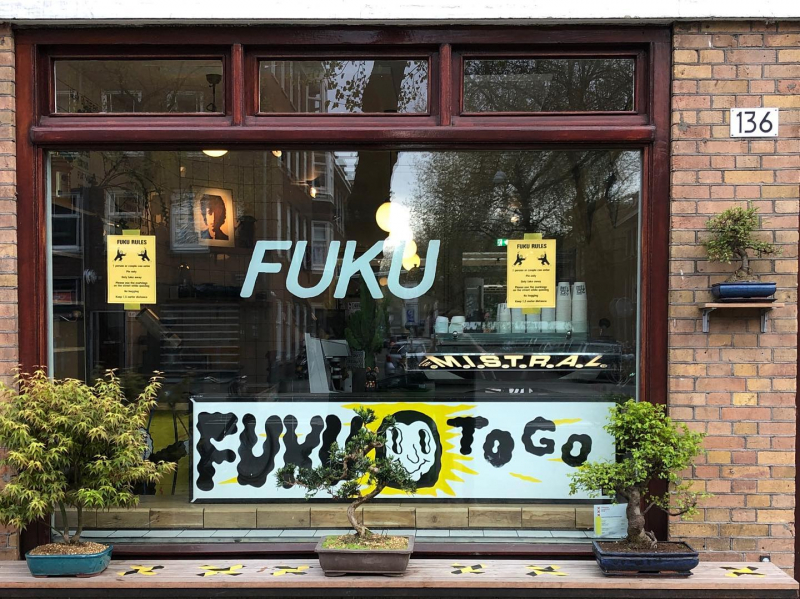
They sell only coffee that tastes great, with complete transparency and fairness. They source directly from farmers and trusted European importers to ensure that every cup is worth it. For them, sustainability isn’t just a buzzword, but a constant process of improvement. They know they aren’t perfect, but every day they look for better ways to reduce their impact on the planet and everything that lives on it. They want their packaging to have a second life —to be reusable, refillable, and if nothing else, at least recyclable. Above all, they want their coffee to taste great, no matter who makes it. Because at the end of the day, they care about one thing—that people enjoy it just as much as they do. In September 2018, they opened their first café in West Amsterdam— FUKU. This Japanese word means happiness or a warm, joyful experience.
Meanwhile, Lex has also been successful on a national and global scale: in 2015, 2016, and 2018, he becamethe Dutch Barista Champion, in 2016 he even won theWorld Barista Championship, and in 2018 he placed second. You can always easily recognize their packaging thanks to its vibrant colors and reusability. All of this under their motto: "Less marketing, more coffee."